The device Jones hit upon to make it take place was not to swamp the banks with new loans (and collateral needs), however to have them make preferred stock problems that the RFC would then purchase up, bestowing them with new assetsand public self-confidence. This came very near to nationalizing the nation's banking system, especially considering that the government might and did affect the banks' financing policies in addition to personnel. Most importantly, Jones firmly insisted that not just the wobbling banks however the largest, strongest New york city banks concern preferred stock for the RFC to buy up also, thus imbuing the entire banking system with brand-new public self-confidence.
1 billionor about $18 billion in today's moneyinto majority of the nation's banks through these chosen stock purchases. In firmly insisting that all major banks concern stock to the federal government, Jones was establishing a precedent for the 2009 bank bailouts of the Obama presidency, which offered emergency funds to the threatened and the safe alike. But the New Dealers went well beyond the more conservative Obama authorities in their semi-nationalization of the nation's banks. There were numerous who thought the administration needs to have gone all the way. "I reflect to the events of March 4, 1933 with an ill heart," Senator Bronson Cutting, a liberal Republican politician from New Mexico who had actually supported FDR in 1932, wrote later.
It was President Roosevelt's greatest mistake." Yet the president had no clear legal authority to take over the nation's banks, and such an effort might well have led to a drawn-out court or congressional battle, at a time when the country's monetary system required to get back up and running in a matter of days. Bring back confidence in the banking system, in the American government, in democracy itself, were top priorities that would not wait. "For the government to be going to buy stock in a bank and market to the world that it is a partner in that bank is the biggest compliment and source of strength that might pertain to any bank," Jones composed.
Some 20 million depositors saw their cost savings saved. The huge majority of depositors even in stopped working banks eventually got their refund, thanks to New Deal reforms. In just nine months, the U.S. banking system had been rebornand "BIG JESSE JONES" made the cover of Time magazine. "There was no need of greater authority," excited Time, whose infatuation with Jones never ever dimmed, on the eve of World War II. "Not J.P. Morgan, not even Franklin Roosevelt might be of as much comfort to the public. To many a U.S. resident excellent or little, if Jesse Jones says O.K., it's O.K." Throughout the 2008-2009 financial crisis, more than $360 billion was pumped into significant financial institutions under the Struggling Asset Relief Program (TARP).
Rather, "an overwhelming majority saw the program as a no-strings-attached windfall that could be used to pay for financial obligation, acquire other businesses or invest for the future." PNC even utilized its TARPAULIN infusions to purchase another bank, National City Corp., at a deal rate. Executive pay and bonuses quickly soared to tape highs, despite efforts by President Obama to include them through ethical suasion. Jesse Jones, director of the Restoration Finance Corporation, was one of the 3 key consultants FDR dealt with practically all the time, to prepare the opening salvo of the Hundred Days and the New Offer: conserving the banks (How to finance a home addition).
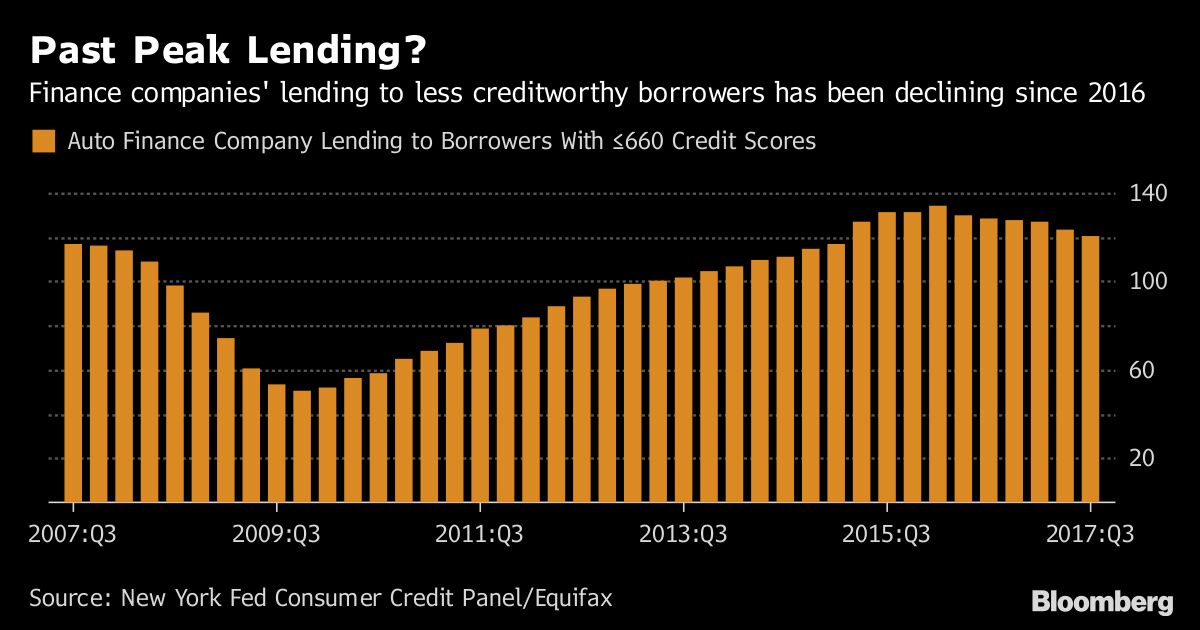
The Ultimate Guide To What Is A Consumer Finance Company
They succeeded in curbing lenders' self-compensation, and prodded them to start providing again. Appearing at the yearly convention of the American Bankers Association, in August of 1933, Jones candidly prompted his fellow moneymen to "be smart, for once. Take the government into partnership with you and after that go partners with the President in the recovery program without stint." However bankers have smaller functions than the government, and financing, under both the Obama and Roosevelt presidencies, was far from their very first top priority. Jones "scolded, asked, and bullied lenders to lend," especially in "industries of the smaller sized and medium-sized type," throughout the Great Anxiety.
In June of 1934, Roosevelt signed legislationinitiated in part by Jesse Jones, and crafted by lead RFC counsel Tommy Corcoranthat offered the RFC and the Fed the authority to make loans directly to organizations. Within four months, the RFC had lent $30 million to private market, offering money wherever and whenever it was needed most. Within days of his inauguration, Roosevelt had the RFC provide $22. 3 million to the Chicago Board of Education, to lastly pay those long-suffering teachers. When an earthquake struck Los Angeles, $13 million in low-interest RFC loans was rushed out to the coast to help small business owners there rebuild.
" Nobody need to be allowed to suffer for an absence of food or clothing or shelter, or become mendicants, for the lack of credit for agriculture, service, and industry, little along with large," Jones informed bankers to their faces. Yet the RFC was much more than an early version of FEMA, much as that was required. It likewise provided seed money for what showed to be some of the most enduring New Offer initiatives. RFC loans funded the critical farm subsidy system set up by Farming Secretary Henry Wallace under the Agricultural Adjustment Administration (AAA). It was the RFC that funded Harry Hopkins's Works Development Administration (WPA) projects, and the mortgage subsidies from the House Owners Loan Corporation and the Federal Real estate Administration that helped keep countless Americans in their homes.
The thousands of EHFA credits balanced $150 a loan, allowed the sale of over one million electrical devices, and made a profit of $175,000 which went right back to the Treasury. The RFC lent to universities and schools, to cities and towns, and public authorities. It purchased up community bonds and drove down the cost of loaning. When a distribute of 70 Wall Street banks made the only bid on a huge public works project in New york city City, the RFC stepped in to knock down the interest rates the banking cartel offered, conserving the public $3. 5 million, or about $55 million today (Why are you interested in finance). What jobs can i get with a finance degree.
The agency's efficiency was indisputable. For all that it did, the RFC, at its height during the Anxiety, used just 3,200 people, and spent only one-half of 1 percent on overhead. How did we become the America that https://60eed06275455.site123.me/#section-6105844d06715 can't even lay a few hundred miles of track without crippling expense overruns and political gridlock? Politically, Jones was simply as vital to the president, a connection to both business neighborhood "west of the Hudson" and the currently powerful Texas delegation in the Congress. "While the President understood I was on the conservative side, he regularly suggested to me that he believed my course an excellent antidote for the severe liberals, a sort of balance, as it were," Jones would write in his 1951 memoir, Fifty Billion Dollars.